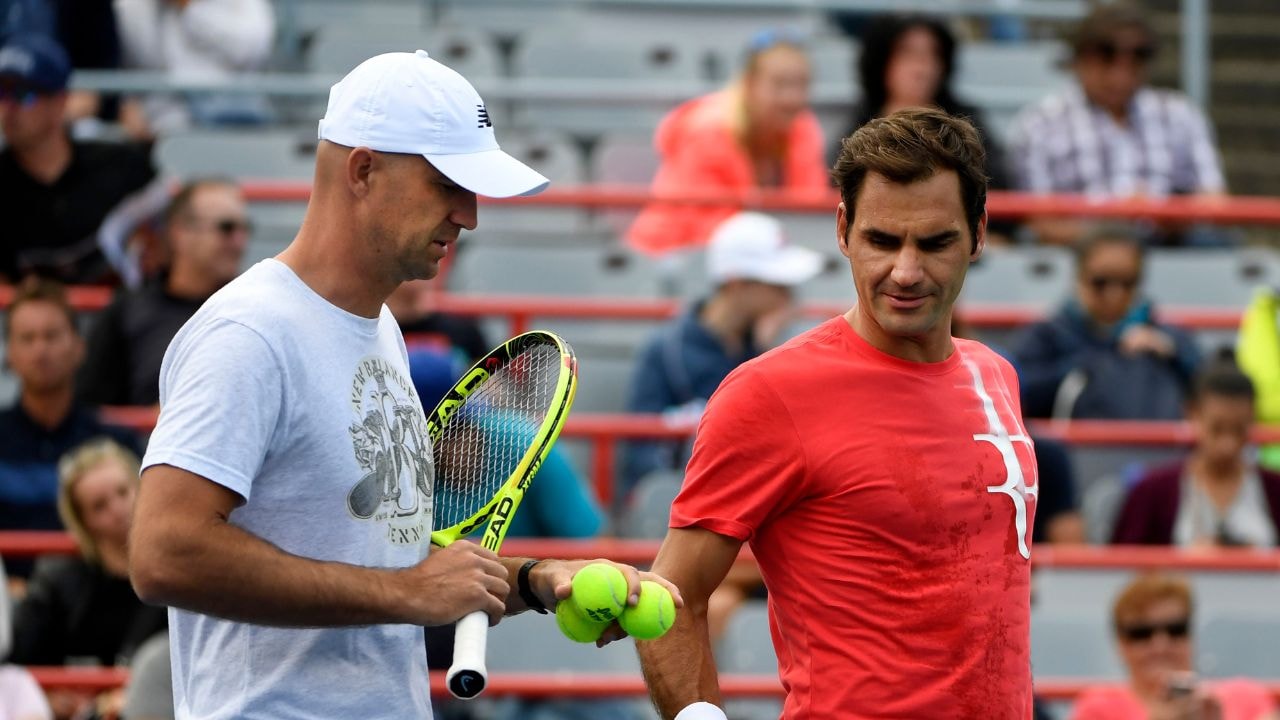
Ljubicic Analyzes Big 3: Federer's Unique Impact in GOAT Race
The debate over who truly deserves the title of the Greatest Of All Time (GOAT) in men's tennis is arguably the sport's most enduring and passionate discussion. For years, it has revolved around the unparalleled achievements of Roger Federer, Rafael Nadal, and Novak Djokovic – three titans who have dominated the game for two decades. While Novak Djokovic currently holds the statistical lead in Grand Slam titles, former world No. 3 and ex-coach to Roger Federer, Ivan Ljubicic, has reignited the ljubicic débat goat with a nuanced perspective that emphasizes impact over mere numbers.
Ljubicic, speaking on Greg Rusedski's podcast, offered a compelling argument: the essence of being the GOAT might not solely reside in the trophy cabinet. For him, the influence a player has on the sport itself, their tactical innovation, and their ability to captivate audiences could weigh as heavily, if not more, than a raw tally of victories. This perspective challenges the conventional wisdom that often prioritizes statistics above all else, inviting fans and analysts to consider a deeper, more subjective layer of greatness. You can delve further into this perspective with Ljubicic on GOAT: Why Federer's Impact Trumps Djokovic's Slams.
Beyond the Grand Slam Count: Redefining "Greatness"
In the relentless pursuit of the GOAT, the focus has often narrowed to Grand Slam titles, weeks at World No. 1, and head-to-head records. Novak Djokovic's remarkable consistency and record-breaking 24 Grand Slam victories undeniably place him at the pinnacle of statistical achievement. However, Ljubicic's contention is that "greatness" itself is a multifaceted concept, encompassing far more than just quantitative metrics. "They are different. It's really difficult to say who is the best," Ljubicic stated, acknowledging Djokovic's statistical edge but immediately pivoting to the profound influence of his rivals.
He argues that the "impact on the game" is a crucial, often overlooked, component. This impact can manifest in various ways: inspiring new generations, driving tactical evolution, elevating the sport's global appeal, and creating moments of unforgettable drama. For many fans, the aesthetic pleasure of watching a player, their sportsmanship, and their ability to connect with audiences transcend the numbers. While Djokovic's clinical efficiency is awe-inspiring, Federer's artistry and Nadal's raw, unyielding passion often evoked a different kind of emotional response, shaping the very soul of tennis fandom. This redefinition invites a richer, more qualitative assessment of the Big 3's legacies.
Federer's Unique Impact: The Tactical Alchemist and Unpredictable Maestro
Ljubicic's analysis particularly highlights Roger Federer's unique contribution to the sport. As a former opponent and later his coach, Ljubicic had an intimate view of Federer's genius. "Against Roger it was complicated, because he always did something different," he recalled. This wasn't merely about hitting flashy winners; it was about Federer's profound tactical unpredictability. He forced opponents to constantly adapt, to abandon pre-match game plans, and to improvise on the fly. This level of strategic pressure wasn't just about winning points; it was about dismantling an opponent's entire mental framework.
Federer's ability to seamlessly shift gears, to mix slices with powerful topspin, serve-and-volley on a whim, or unleash a perfectly placed drop shot from anywhere on the court, made him a truly enigmatic adversary. He didn't just play tennis; he orchestrated it, leaving opponents and spectators alike in awe of his creative solutions. This constant innovation pushed the boundaries of what was thought possible in tennis, inspiring countless players to diversify their games and think more dynamically. His elegance and fluidity also captivated millions globally, drawing new fans to the sport and imbuing it with a sense of artistry.
The Backhand Transformation: A Testament to Evolution
A fascinating insight from Ljubicic further underscores Federer's commitment to impact and evolution: the strategic overhaul of his backhand. Ljubicic revealed a key tactical adjustment during his coaching tenure: minimizing the sliced backhand against Rafael Nadal. "One thing is true is that we all knew that against Rafa you cannot slice," he stated. This was a direct counter to Nadal's strategy of relentlessly attacking Federer's backhand slice, which allowed him to set up his devastating forehand.
By focusing on a flatter, more aggressive backhand, even late in his career, Federer not only neutralized Nadal's primary weapon but also added a new dimension to his own game. This willingness to adapt and refine his technique, even as an established legend, is a profound testament to his desire to remain at the sport's cutting edge. It’s a practical lesson for any aspiring athlete: never stop evolving, never stop trying to improve, even your perceived weaknesses. This strategic chess match at the highest level shows that true greatness isn't just about inherent talent, but also about relentless self-improvement and tactical intelligence. This commitment to evolution had a ripple effect, inspiring other players to develop more robust, offensive backhands and elevating the overall standard of men's tennis.
Contrasting Legacies: Djokovic's Unbreakable Wall vs. Nadal's Relentless Drive
While Federer's impact is often tied to his tactical brilliance and artistry, Ljubicic also shed light on the distinct influences of Nadal and Djokovic. Djokovic, at his peak, is described as "perhaps the most difficult" opponent, an "almost unbreakable force" who relies on free points and leaves little room for error. His relentless efficiency, defensive prowess, and uncanny ability to return almost any shot have made him a statistical marvel. He epitomizes mental fortitude and physical endurance, pushing the boundaries of what the human body can endure on a tennis court. His legacy is one of unwavering consistency, unmatched resilience, and a near-perfect game devoid of significant weaknesses.
In contrast, Ljubicic found facing Nadal less daunting tactically, noting the Spaniard's tendency to play further back, which often afforded opponents more time on serve. Despite a losing record against Nadal, there was a perceived "sense of possibility" that was rarely present against a peak Djokovic. Nadal's impact, however, is equally monumental. His unparalleled dominance on clay, his gladiatorial spirit, and his ferocious intensity have redefined what it means to be a fighter in tennis. He embodies the sheer will to win, inspiring millions with his never-say-die attitude and physical prowess. His impact lies in his ability to push the human body and spirit to their absolute limits, delivering some of the most memorable and physically grueling matches in tennis history. You can read more about this comprehensive argument in Ljubicic Reignites GOAT Debate: Impact Matters More Than Titles.
Learning from the Big 3's Diverse Approaches
For aspiring players and coaches, the insights from Ljubicic offer valuable lessons beyond just the GOAT debate.
- Embrace Adaptability (Federer): Don't stick rigidly to a single game plan. Be willing to improvise, innovate, and evolve your technique, even your perceived weaknesses.
- Cultivate Mental Fortitude (Djokovic): Understand that consistency and resilience are paramount. Learn to minimize errors and capitalize on every opportunity, leaving opponents no room to breathe.
- Unleash Passion and Intensity (Nadal): Channel your emotions into a relentless drive. Fight for every point, never give up, and let your sheer will to win define your presence on court.
Conclusion: The Enduring Legacy of Impact
Ivan Ljubicic's intervention in the ljubicic débat goat serves as a crucial reminder that the discussion of tennis's greatest player should extend beyond raw statistics. While Novak Djokovic's record-breaking Grand Slam tally is an undeniable feat, the Croat's argument for the profound "impact" of Roger Federer – and indeed Rafael Nadal – adds a vital qualitative dimension to the conversation. Federer's tactical unpredictability, his willingness to evolve even at the peak of his career, and his sheer artistry created a legacy that transcends mere wins and losses. His influence fundamentally shaped how the game is played and perceived globally.
Ultimately, the GOAT debate may never have a single, definitive answer, precisely because greatness is interpreted through multiple lenses. Ljubicic's insights compel us to appreciate the distinct contributions of each member of the Big 3, acknowledging that true greatness encompasses not just what you win, but how you win, how you inspire, and how you forever alter the landscape of the sport. Their collective impact will resonate for generations, ensuring that this captivating discussion remains as vibrant as ever.