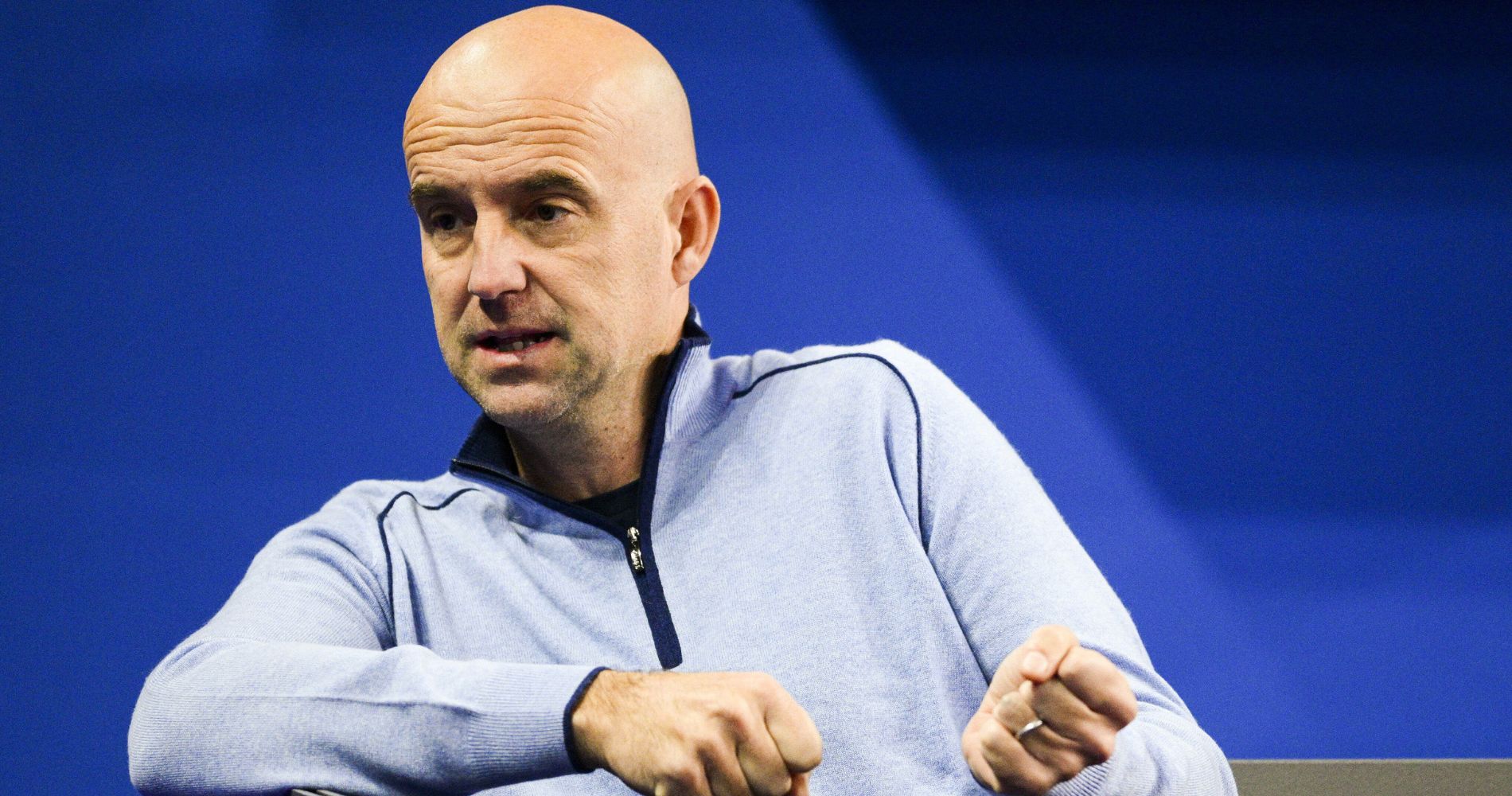
The debate over the greatest tennis player of all time (GOAT) is as passionate and enduring as the sport itself. While raw statistics often dominate the conversation, former ATP player, Roger Federer's ex-coach, and current High-Performance Director at the French Tennis Federation, Ivan Ljubicic, offers a refreshingly nuanced perspective. Ljubicic, who faced all three legends – Roger Federer, Rafael Nadal, and Novak Djokovic – during his career, argues that a player's indelible impact on the game might, in fact, carry more weight than the sheer volume of Grand Slam titles won. His insights challenge the prevailing narrative and redefine what it truly means to be the GOAT in the eyes of many.
The Impact Factor: Why Ljubicic Prioritizes Influence Over Accolades
For years, the GOAT discussion has largely revolved around who possesses the most Major trophies, weeks at World No. 1, or head-to-head records. Novak Djokovic, with his record-breaking 24 Grand Slam titles, often appears to be the undisputed leader by these metrics. However, Ljubicic's recent remarks on the Off Court with Greg podcast, hosted by Greg Rusedski, inject a vital qualitative dimension into the discussion. He contends that while Djokovic's statistical supremacy is undeniable, the transformative influence of Federer and Nadal on tennis transcends mere numbers. Ljubicic Reignites GOAT Debate: Impact Matters More Than Titles, underscoring his belief that true greatness extends beyond the trophy cabinet.
“They are different. It’s really difficult to say who is the best,” Ljubicic remarked, acknowledging the complexity. “Of course, Novak has won the most victories, but for me, Roger’s impact on the game, and Rafa’s at different times, is enormous. Maybe even more important than Novak’s.” This perspective highlights a crucial philosophical divide: Is the GOAT simply the most dominant player statistically, or is it the one who fundamentally reshaped the sport, inspired generations, and captivated audiences with a unique style and personality? Ljubicic firmly leans towards the latter, suggesting that the "true GOAT" isn't solely defined by win-loss records.
To truly understand Ljubicic's argument, one must consider what "impact" entails. It’s not just about winning matches; it's about altering the very fabric of how the game is played, perceived, and loved. It's about tactical innovation, captivating artistry, and an enduring legacy that resonates far beyond the final score. Federer, with his elegant, all-court game and unparalleled fluidity, redefined aesthetics and aggressive play. Nadal, with his gladiatorial spirit and revolutionary topspin forehand, pushed the boundaries of physicality and mental fortitude on clay. Djokovic, through his relentless consistency and iron-clad defense, demonstrated an almost robotic perfection that few can match. Each has left an indelible mark, but for Ljubicic, Federer's "considerable" impact stands out in a way that transcends even the most impressive statistical achievements.
Deconstructing the Big Three: Tactical Brilliance and Opponent Psychology
Ljubicic's unique position as both a former opponent and a coach to one of the Big Three provides unparalleled insight into their respective games. His analysis delves into the tactical intricacies and psychological pressures each player exerted, revealing why he perceives Federer's impact as so profound.
The Federer Factor: Unpredictability and Strategic Genius
According to Ljubicic, facing Roger Federer was "complicated, because he always did something different." This wasn't just about his vast array of shots; it was about his capacity to constantly shift tactics, forcing opponents to abandon their pre-planned strategies and improvise on the fly. Federer's ability to seamlessly transition from slice to flat, drop shot to passing shot, serve-and-volley to baseline rally, created an aura of tactical unpredictability that few, if any, players have ever matched. He wasn't just defeating opponents; he was making them question every assumption about how to play tennis. This constant intellectual and physical challenge, the need to recalibrate on every point, speaks to a deeper form of impact – one that reshaped how opponents prepared and approached their matches. It's this dynamic, evolving mastery that Ljubicic points to as a key differentiator. It's this unique influence that makes Ljubicic Analyze the Big 3, highlighting Federer's Unique Impact in the GOAT Race.
Nadal and Djokovic: Contrasting Challenges
While acknowledging his losing record against Rafael Nadal, Ljubicic found facing the Spaniard less daunting in some respects. He noted Nadal's tendency to play further back, which often provided more time on the serve. This isn't to diminish Nadal's power or genius; rather, it highlights a more predictable, albeit overwhelmingly effective, pattern of play. Opponents knew what they were getting with Nadal – an intense, relentless, high-bouncing assault – and while incredibly difficult to counter, it offered a semblance of strategic preparation. There was a "sense of possibility," even in defeat, a feeling that opportunities could arise if executed perfectly.
Novak Djokovic, however, presented an entirely different challenge. Ljubicic described him as "perhaps the most difficult" opponent, an "almost unbreakable force." Djokovic's game, characterized by relentless efficiency, incredible court coverage, and a mastery of taking "free points," left little to no room for error. His capacity to absorb pressure, return almost anything, and turn defense into offense with surgical precision could be demoralizing. While undeniably effective and statistically superior, this relentless efficiency, in Ljubicic's view, sometimes lacked the dramatic flair and tactical inventiveness that defined Federer's approach. Djokovic's greatness lies in his unparalleled consistency and ability to nullify an opponent's strengths, creating a suffocating pressure cooker where mistakes are immediately punished.
Federer's Tactical Evolution: The Backhand Revelation
Ljubicic's insights extend beyond broad impressions to specific tactical revelations. During his coaching tenure with Federer (2016-2022), a period that saw Federer add three more Grand Slam titles to his tally, a key adjustment was made: the elimination of the sliced backhand against Rafael Nadal. "One thing is true is that we all knew that against Rafa you cannot slice," Ljubicic stated. This seemingly simple change was a profound strategic shift. For years, Federer's sliced backhand was considered a potential weakness that Nadal's heavy topspin forehand could exploit by driving through it repeatedly.
By focusing on hitting a flatter, more aggressive backhand, Federer not only denied Nadal his favorite target but also significantly improved his overall backhand consistency and power. This adaptation wasn't just about neutralizing a specific opponent; it was a testament to Federer's enduring willingness to evolve and refine his game, even in the twilight of his career. It underscored his strategic brilliance and his openness to new approaches. This tactical evolution, born out of a desire to overcome his greatest rival, had broader implications, enhancing his entire game and proving that even legends can find new ways to elevate their performance.
This willingness to innovate, to break from established habits and embrace a challenging new technique, speaks volumes about Federer's dedication to mastering his craft. It's a practical lesson for any athlete or professional: continuous learning and adaptation are crucial for sustained excellence. By denying Nadal the comfortable rhythm he sought, Federer complicated the dynamic, forcing Nadal to adjust and showcasing Federer's own intellectual impact on the game's tactical landscape.
Beyond the Court: Defining a Legacy and the True "GOAT"
Ljubicic's argument compels us to consider what we truly value in a "greatest of all time." Is it purely about records, or does it encompass the intangible qualities that define a sporting legend? Federer’s artistry, grace, and sportsmanship captivated millions, drawing new fans to tennis worldwide. Nadal’s indomitable spirit, fighting prowess, and humble demeanor have inspired countless others to push their limits. Djokovic’s unparalleled mental toughness and relentless pursuit of perfection serve as a masterclass in athletic excellence.
The "GOAT" debate, as Ljubicic aptly points out, remains "stubbornly, beautifully messy" because it touches upon subjective values and personal connections to the sport. While Djokovic may statistically hold the most impressive resume, the emotional resonance, cultural impact, and unique ways in which Federer and Nadal have shaped the game arguably contribute just as much, if not more, to their legacy as the greatest. Their ability to transcend the sport itself and become global icons, influencing fashion, philanthropy, and mainstream culture, offers a different measure of greatness.
Ultimately, Ljubicic's intervention reminds us that tennis, like any art form, isn't solely about objective results. It's about the stories, the drama, the innovation, and the unforgettable moments that players etch into our collective memory. The numbers tell one part of the story, but the impact, the sheer transformative power of a player, tells another – perhaps even more profound – narrative of greatness.